Disposable, Burner, or Throwaway Email: The Difference
The words overlap and the sources disagree, so start with what a burner email is, then check four things the label alone does not reliably reveal.

What a burner email is
A burner email is an informal name for an email address used separately from your primary address or for a limited purpose. The sources reviewed here apply the label to three setups: a temporary inbox, a separate mailbox account, and a forwarding or masked alias. The label alone does not reveal where mail lands, how access is kept or recovered, whether it can receive messages only, reply, or start new messages, or what expires.
The word "informal" is doing real work in that sentence. The two IETF standards cited here do not define "burner email." RFC 5321 distinguishes an address from the mailbox that mail is deposited into and describes alias expansion. RFC 5322 defines Internet Message Format syntax. Neither contains the word "burner," and neither assigns the label to one of the three setups above.
Burner email appears to extend the burner-phone metaphor: something kept for temporary or disposable use. That is a reasonable reading of how the word traveled, not a documented origin story.
One boundary before going further. This article is about how these things behave operationally. It does not cover which addresses websites accept, a separate question taken up in why websites block disposable email addresses.
Why the sources disagree
Public sources use this informal label differently; the examples below describe three implementations. Checked August 8, 2026.
Proton groups one-time, disposable, and burner email together as temporary addresses. Typewire describes a burner as a separate secondary account used for noncritical mail. Burner Mail defines a burner email as a custom forwarding address that routes mail into a personal account, and its service also supports replying through that address. An Associated Press article frames a randomized forwarding mask as a burner email, while separately mentioning a throwaway Gmail or Yahoo account.
The two dictionaries cited here support the connotation but not a single email architecture. Dictionary.com records "burner" as meaning temporary or disposable, often for anonymity, and gives burner email accounts as an example. Merriam-Webster defines the related "burner account" as an often-temporary anonymous social media account, which is not an email architecture.
So read the feature description, not the name. A page that tells you what the product does is more useful than one that tells you what category it belongs to.
Four useful checks the name will not tell you
These four questions distinguish the three architectures. They do not tell you everything about a service, and they deliberately leave out cost, terms, and privacy practices.

Where does received mail land: a separate inbox, or an existing mailbox? This is the question the label obscures most completely, and its answer has an immediate operational effect. A forwarding alias puts mail in the mailbox you already read. The other two setups keep it somewhere else. Make the wrong assumption, and you either route mail from a signup into your main inbox when you meant to keep it out, or leave messages somewhere you will not think to look.
How is access kept or recovered? Do not assume that having an account means recovery exists or will succeed. Access can be continuously held, protected by a password with a provider recovery process, held by a token or link, protected by a passphrase, or have no recovery path. The practical distinction is between a credential the provider may help reset and one the provider says cannot be recovered.
Can it receive messages only, reply to messages, or start new messages? Those are three capabilities, not one. A service can support replying to a message it received and still not let you open a new conversation from that address. If a feature page says only "send," check whether that means replies, new messages, or both.
What expires: the address, its messages, neither, or access to it? These are separate clocks, and providers document different combinations of them. An address can outlive its messages. Access can end while the address itself keeps working and receiving. The word "temporary" does not identify which clock applies or guarantee that the address itself expires.
The three setups people call a burner
Run those four checks against each architecture, and the differences stop depending on vocabulary.

A temporary inbox with no account puts mail in a separate inbox. How access is kept varies by service, and so does outbound capability. The address, the messages, and your access to them can expire on independent schedules.
A separate mailbox account puts mail in that account's own mailbox. You access the mailbox by signing in, and whether recovery works depends on that provider's process. Outbound behavior also depends on that provider rather than on the architecture. Its lifespan follows the provider's policies. A second personal Gmail account is the common example, and the comparison with a disposable inbox works through how each one fails.
A forwarding alias or mask routes mail into a mailbox you already have. It has two access questions rather than one: reading the forwarded mail is access to the destination mailbox, while managing or recovering the alias itself happens at the alias provider. Reply support varies by provider and plan. A separate comparison of temp mail with email aliases covers those services in detail.
Apply the four checks to the specific address feature, not to the provider's brand name. Services described with the same label can give different answers to those questions. That is the practical payoff: you stop trying to force a product into a category and start reading what the specific feature says it does.
Mailxus is one specific point inside the first group, and only that. Mail lands in a separate inbox on the page. Access is kept by an access token stored in your browser, with no recovery path, so losing it ends access permanently. It is receive-only. The address has no time limit, while messages in it are removed on a schedule. If that combination suits the job, you can create a disposable address on the Mailxus home page.
"Fake email" is the wrong word
A working disposable address is a real address. It sits on a real domain; mail reaches it over ordinary mail infrastructure, and the messages that arrive are ordinary messages. RFC 5321 makes the relevant distinction: the address is the thing mail is sent to, and the mailbox is where it is deposited.
"Real" here means deliverable. It does not mean identity-verified, permanent, or appropriate for every use, and none of those follow from the address working.
Disposable describes intended use or lifecycle; it does not mean the address is technically invalid. It is worth being precise about that, because the word "fake" invites a conclusion the technology does not support: a real address does not make an inaccurate statement true. If a service requires accurate information, the address you used does not change that obligation, and the service's terms still apply.
Frequently asked questions
Is a burner email illegal?
There is no single worldwide rule for "burner email." An alternate address by itself does not determine legality. What matters is how it is used, what information a service requires, the service's terms, and the laws that apply to the conduct. Do not use one to impersonate someone, commit fraud, or provide false identity information where accurate information is required. This is general information, not legal advice.
Is a throwaway email the same as temp mail?
The labels overlap in public usage, but neither guarantees a particular implementation. Cloudflare calls its feature Disposable Email Checks, describes the addresses as throwaway email addresses, and refers to temporary or disposable email services in the field description. That wording shows overlap, not architectural equivalence. Run the four checks on the specific service.
What about an email alias?
An alias, as the term is used above, means an address that forwards mail to an existing mailbox rather than holding it in a separate inbox; some sources call that a burner address too. That routing difference answers the first check, while access, outbound capability, and lifespan still have to be confirmed with the provider.
Topics

Author
Inbox Privacy Writer
Nora writes about what happens to an email address after you hand it over: who ends up holding it, how it reaches a marketing list, and where a throwaway address takes the pressure off. She reads the fine print on a service before recommending it, and she says so plainly when a privacy claim does not hold up.
Related articles
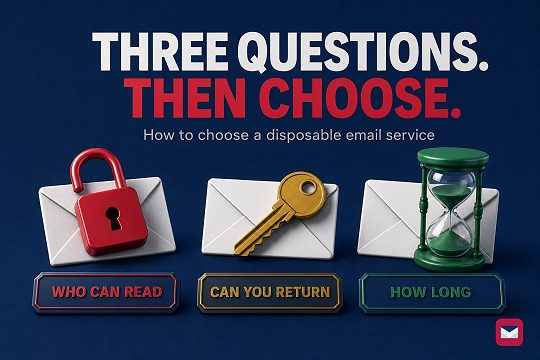
6 min read
How to Choose a Temp Mail Service That Fits
Choose a disposable email service by checking who can open the inbox, whether you can return later, and how long the address and messages remain available.
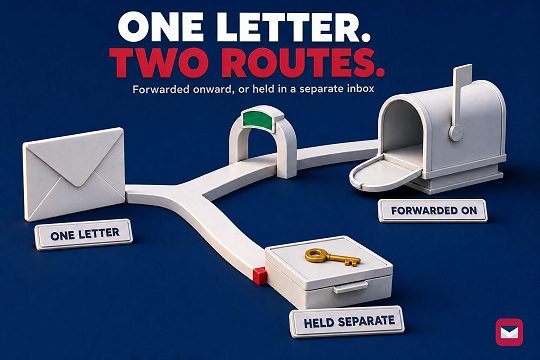
10 min read
Temp Mail vs Email Aliases: How to Pick One
The alias services compared here forward into your regular inbox; reply support varies by provider and plan. Mailxus keeps mail in a separate, receive-only inbox.
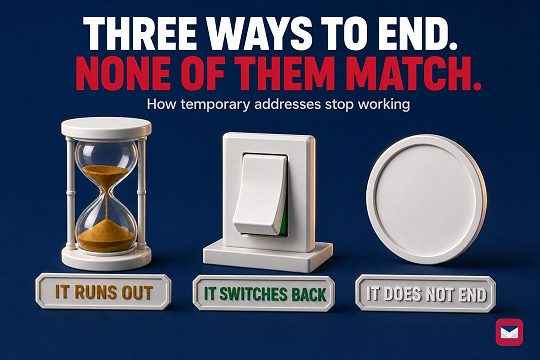
9 min read
Temporary Email Expiration Models Compared
Three expiration models across six provider modes. Address activity, message retention, and inbox access are separate things.
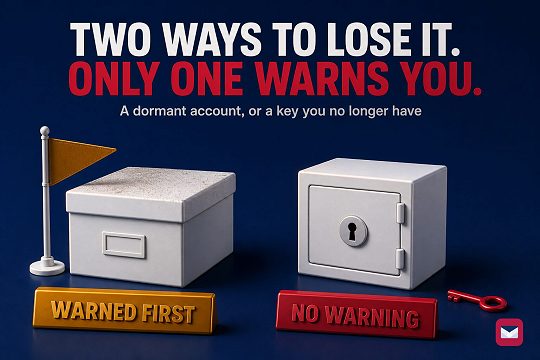
8 min read
Temp Mail vs a Second Gmail Account: Which to Use
A second personal Gmail account can send; its Google Account has documented recovery. A Mailxus address has no inactivity clock, but access depends on its token.
8 min read
How Signup Forms Lead to Inbox Spam
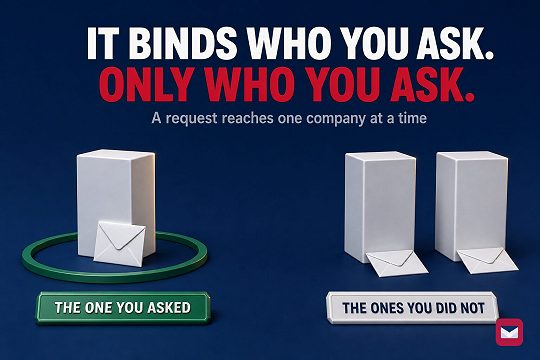
Under US CAN-SPAM, a covered commercial sender must honor an opt-out within 10 business days. The request cannot retrieve copies held elsewhere.
7 min read
ChatGPT Login Codes: Risks of a Disposable Inbox
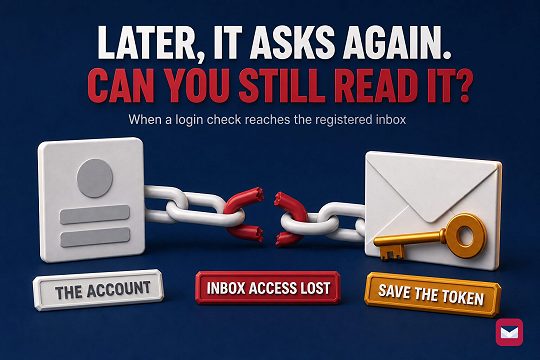
OpenAI may send a six-digit login code to the registered email address. See what that means for disposable inbox access and when to change the email.
8 min read
X Account Locked? Email, Phone, and Recovery Paths
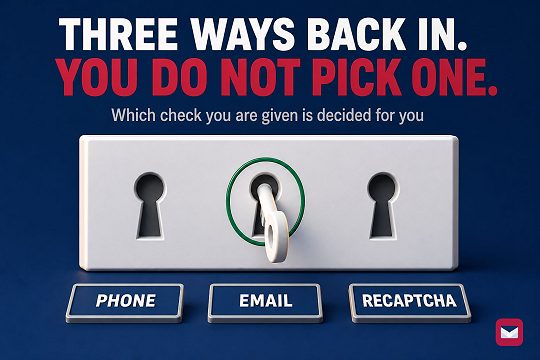
X shows one verification route at a time, and the message decides which. Losing both the linked inbox and a verified phone closes the documented paths.
8 min read
Discord Server Verification Levels: Email, Time, Phone
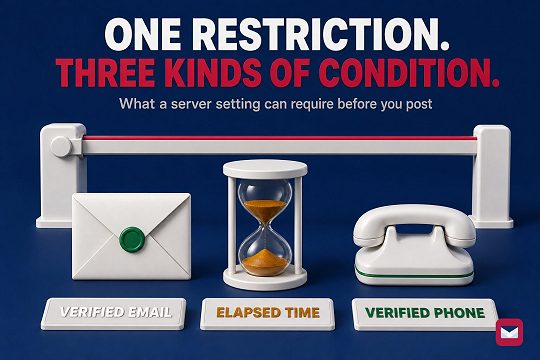
Discord's five server verification levels can require a verified email, elapsed time, or a verified phone. See what each level does and cannot prove.
8 min read
Why Websites Block Disposable Email Addresses
Why sites reject disposable email, how domain and risk checks work, what each rejection signal proves, and the safe next step.


